Turn sales call notes into a follow-up that only confirms what was agreed
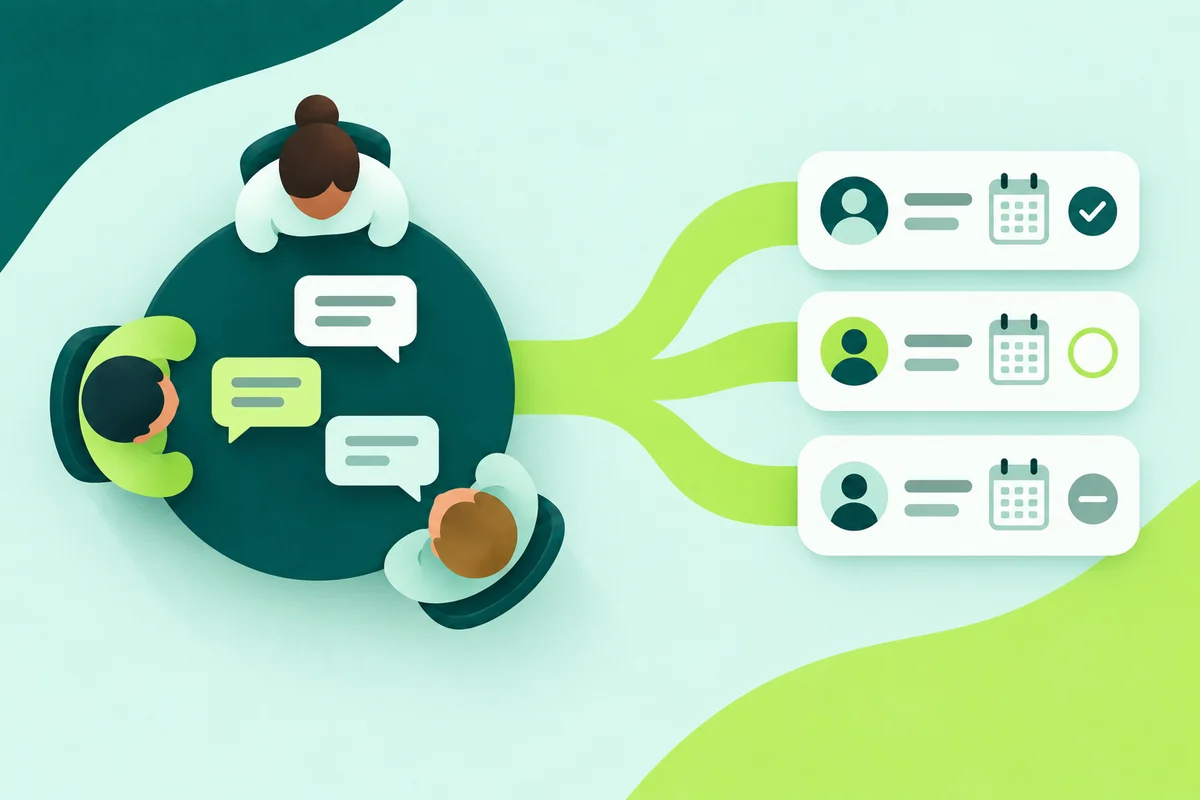
Sort call notes into needs, objections, agreed next steps and items to confirm first, then draft a follow-up that commits to nothing the call didn't settle.

Practical AI guides
Meeting notes, follow-ups, Slack, Teams and replies with the agreed facts intact.
25 articlesSort call notes into needs, objections, agreed next steps and items to confirm first, then draft a follow-up that commits to nothing the call didn't settle.

Ask AI for a cross-office meeting time, check it in the clock-change weeks, and build a small date-aware planner if you schedule across zones every week.
Give AI a short glossary and context, make it flag words with more than one meaning, and get a draft and term map you can check before sending.
Ask AI for an .ics calendar file from a table of events, then check the time zone, the all-day end dates and the event IDs before anyone imports it.
Find a repeated support job, draft from current instructions and test the macro on a matching case and an exception.
Summarise a busy Slack channel for a date range, then use the summary's sources to find the thread where people did not agree.
Set two meeting summaries side by side, check every material claim against the record, including the ones they agree on, and find what both left out.
Use Rovo to turn a conversation into a reviewable Jira draft, with agreed work and unanswered questions kept separate.
Use Rewrite with Copilot on a Teams message you wrote yourself, and check that tidying the wording hasn't turned a condition into a promise.
Choose when Zoom's AI meeting summary starts and who receives it, tell attendees in words that match the settings, and know how to stop it.
Think a small work problem through aloud with Gemini Live, then check the transcript so a misheard constraint doesn't become the plan.
Add a readable, checked CRM summary with a source trail, while preserving the original and avoiding unsupported audit-history promises.
Turn a note photo into a literal transcription, mark unreadable text and keep interpretation separate from what the page actually says.
Use Gemini to extract requests from a defined batch of Gmail threads, then check dates, ambiguity and messages it may have missed.
Summarise selected sticky notes with Miro AI, keep disagreement visible and check every decision against the board.
Create a source-linked Slack canvas, check what was agreed and keep unresolved questions visible.
Extract decisions, actions and open items from six sets of meeting notes, then propose a small, reversible change to the meeting's owner.
Check the AI call summary against the transcript, then add a four-line handover that says what the call means for the account.
Give Claude the customer’s question, the verified case facts and the current policy, then check the reply’s promises before sending.
Separate an accepted change from a later suggestion or conflicting draft.
Give AI your notes, later messages and the current plan, and get a short brief on what changed, what needs deciding and what is still unknown.
Record a meeting with Wispr Notetaker, check both voices were captured, and use AI to find the names, dates and commitments worth checking before anyone relies on them.
Draft a follow-up from a meeting transcript and the Slack replies that came after it, check every owner and date, and post it once to the right thread.
Turn meeting notes into decisions, agreed actions and open questions, with the right owners and the latest accepted dates, then draft the follow-up.
Turn your work notes into neutral 1:1 questions and a timed agenda, including the commitments you owe.
With your permission, Google Analytics uses cookies to measure visits and which guides people read. It stays off until you accept. Use Analytics choices in the footer to change your choice. Rejecting after accepting refreshes this page. Privacy details.